

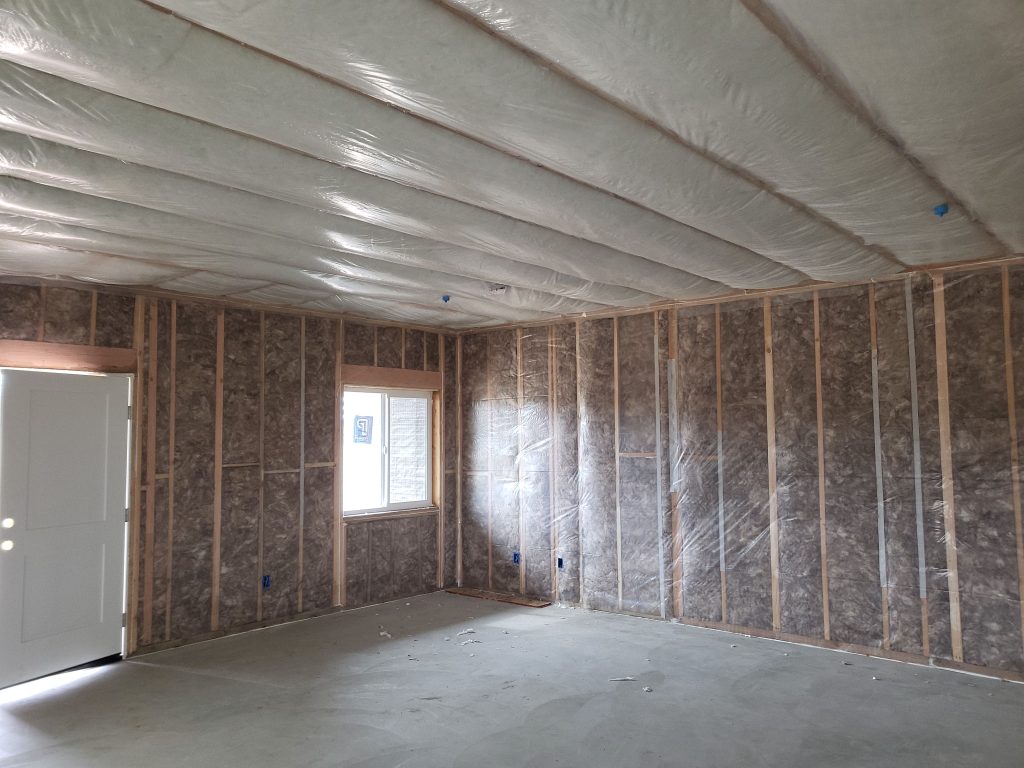
Blown-in fiberglass can be a better choice for many attics because it is lightweight, settles less over time, and handles accidental moisture exposure differently from cellulose. Cellulose does have one clear advantage: it provides more R-value per inch. That means the best choice is not based on one number alone.
For homeowners comparing blown-in fiberglass vs cellulose, the condition and design of the attic matter. Available space, existing insulation, air leaks, ventilation, moisture history, and the required total R-value can all change the recommendation.
Here is what homeowners should know before choosing between these two common types of blown-in attic insulation.
Key Difference Between Blown-In Fiberglass And Cellulose
It is easy to assume that the insulation with the higher R-value per inch must be the better material. Attic insulation does not work quite that simply.
R-value measures resistance to heat flow. According to the U.S. Department of Energy’s Building America Solution Center, loose-fill cellulose has a settled R-value of about R-3.2 to R-3.8 per inch. Loose-fill fiberglass is about R-2.2 to R-2.7 per inch.
So cellulose clearly provides more thermal resistance within each inch of depth.
Why Fiberglass Insulation Needs More Installed Depth
A lower R-value per inch does not mean fiberglass cannot reach the desired attic R-value. It simply means more depth may be needed. For example, Building America estimates that reaching about R-38 may require roughly 10 to 12 inches of cellulose compared with around 14 to 17 inches of fiberglass, depending on the product and installation.
This distinction matters.
If an attic has enough vertical space for the required fiberglass depth without blocking ventilation or creating problems near the eaves, fiberglass may still provide the target thermal resistance while offering other useful advantages.
Why Blown-In Fiberglass Often Suits Attics Better
Fiberglass starts becoming especially attractive when homeowners look beyond R-value per inch.
Blown-In Fiberglass Adds Less Weight Over Ceilings
Loose-fill fiberglass is much lighter than cellulose.
At approximately R-38, Building America lists an installed weight of around 0.5 to 1.2 pounds per square foot for fiberglass. Cellulose is approximately 1.25 to 2 pounds per square foot at the same R-value level. That difference can be relevant when evaluating older ceiling assemblies or homes where additional insulation will be installed over existing material.
This does not mean every older home automatically needs fiberglass. The ceiling condition still needs to be considered. However, lighter material is one practical reason blown-in fiberglass may be preferred for some attic upgrades.
Blown-In Fiberglass Settles Less Over Time
Settling is another major difference.
Loose-fill insulation can lose some installed depth as gravity and vibration cause the material to settle. Building America reports estimated settling of around 10% to 20% for cellulose compared with only 2% to 4% for fiberglass.
Professional cellulose installation should account for expected settling, so this does not mean cellulose will automatically fail later. It does mean initial depth and installation density are very important. Fiberglass’s lower settling rate makes it easier to maintain a more stable insulation depth after installation.
How Moisture Affects Fiberglass And Cellulose Insulation
No insulation should be left under an active roof, plumbing, or moisture leak.
Still, fiberglass and cellulose respond differently when wet. Building America notes that fiberglass is not permanently damaged simply because it becomes saturated with water. Cellulose can break down when heavily saturated.
The correct response to wet attic insulation is always to find and repair the moisture source first. Insulation should never be used to hide a roof leak or moisture problem. After repairs, the insulation condition can be evaluated to decide what needs drying, replacing, or removing.
Attic Conditions That Favor Blown-In Fiberglass
Instead of declaring one material the winner in every house, it is more useful to match the insulation to the attic.
| Your Attic Situation | What Matters Most | How Fiberglass May Help | What Should Be Checked First |
| Older ceiling construction | Added material weight | Fiberglass is lighter at similar target R-values | Ceiling condition and existing insulation |
| Plenty of attic depth | Space for required R-value | Greater fiberglass depth can be installed | Eaves, baffles, and ventilation clearance |
| Past roof or plumbing leak | Material condition after moisture | Fiberglass is less vulnerable to permanent saturation damage | Confirm the leak is fully repaired |
| Long-term depth is a concern | Settling | Fiberglass generally settles much less | Correct installed depth and bag count |
| Attic has shallow edges | Limited installation space | Fiberglass may require too much depth in tight areas | Available space near top plates and eaves |
| Attic has major air leaks | Air movement | Fiberglass alone will not solve the problem | Air-seal the attic floor first |
The table shows why fiberglass vs cellulose attic insulation is not really a one-factor decision.
The correct choice depends on what the attic can support and how the entire attic system is prepared.
Situations Where Cellulose Insulation Performs Better
A trustworthy comparison should also explain where cellulose performs well. Its strongest advantage is R-value per inch. This can matter in areas where insulation depth is restricted. Cellulose can also slow airflow through the insulation layer better than loose-fill fiberglass.
Cellulose also contains a high percentage of recycled paper material. Those are meaningful benefits. They simply do not erase fiberglass’s advantages in lower weight, reduced settling, and response to saturation.
The question should therefore be:
Which material fits this attic better?
Not:
Which material wins every category?
Why Attic Insulation Installation Quality Matters
Even high-quality insulation can perform poorly when it is installed incorrectly.
Blown insulation should have consistent coverage without thin spots or large gaps. The installer also needs to use the manufacturer’s required density and coverage information rather than simply making the attic look full.
Building America warns against “fluffing,” which means installing loose-fill material below the required density. This can reduce the number of bags used and lead to excessive settling and airflow through the insulation.
A proper installation also needs to protect attic ventilation.
Soffit vents should remain open. Baffles may be needed near the eaves to keep loose-fill insulation from blocking airflow. Special care may also be required around recessed lights, exhaust components, and other heat-producing fixtures.
That is why insulation depth alone does not tell the whole story.
Air Seal Your Attic Before Adding New Insulation
One of the easiest mistakes is adding several inches of insulation over a ceiling that still has major air leaks. Insulation slows heat flow. Air sealing controls unwanted air movement.
ENERGY STAR recommends sealing attic-floor air leaks before adding insulation because those openings are much easier to reach before they are covered. Common leak points include attic hatches, plumbing penetrations, wiring holes, dropped soffits, wall top plates, and areas around fixtures.
Homeowners planning an insulation project can therefore benefit from evaluating attic air sealing services before adding more loose-fill material.
The strongest attic system is often not insulation alone. It is air sealing + proper ventilation + correct insulation depth + even coverage.
Can Blown-In Fiberglass Cover Old Attic Insulation?
Yes, in many attics new insulation can be installed over existing insulation.
ENERGY STAR states that homeowners do not necessarily need to use the same insulation material already in the attic. Loose-fill insulation may be added over other existing insulation when conditions are suitable.
That makes blown-in fiberglass useful for some retrofit insulation projects in existing homes.
Old insulation should still be inspected before anything new is added.
Removal may make more sense if the material is:
- wet or moldy
- contaminated by animals
- badly damaged
- carrying strong odors
- preventing needed air-sealing or repair work
ENERGY STAR specifically notes that existing insulation often does not need removal unless it is wet, moldy, smelly, or contaminated with animal waste.
When existing material has those problems, professional insulation removal may need to come before the new installation.
What Victorville Homeowners Should Check Before Insulating
Victorville is located in California Climate Zone 14, according to the City of Victorville. California uses climate zones because building-envelope and energy requirements vary across different parts of the state.
That makes attic planning more useful than simply choosing a material from a product label.
Before installing attic insulation in Victorville, CA, check:
- current insulation depth and condition
- air leaks through the ceiling plane
- roof or plumbing leak history
- soffit and attic ventilation
- available insulation depth near the eaves
- condition of attic ducts and penetrations
ENERGY STAR also advises checking whether attic insulation is evenly distributed. An attic may have enough material in the middle while having low coverage near the edges.
A professional assessment can determine whether the attic mainly needs more insulation, air sealing, removal of damaged material, or a combination of improvements. Alpha Insulation provides new attic insulation and upgrades for homeowners considering these types of changes in Victorville.
Blown-In Fiberglass Works Best as Part of the Whole Attic
For many attic projects, blown-in fiberglass insulation offers a strong balance of low weight, minimal settling, flexible coverage, and resilience when accidental wetting occurs. Cellulose remains a capable insulation material and provides more R-value per inch. That makes it useful where available depth is limited.
But R-value per inch should not be the only deciding factor. The better insulation choice depends on available space, existing materials, air leakage, ventilation, moisture conditions, ceiling construction, and the total R-value the project needs. That is why a properly evaluated attic may point toward fiberglass even though cellulose has the higher R-value per inch.
Blown-In Fiberglass Versus Cellulose Attic FAQ
Is Blown-In Fiberglass Better Than Cellulose In Attics?
Blown-in fiberglass can be better when low weight, reduced settling, and moisture tolerance are priorities. Cellulose provides more R-value per inch, so attics with limited depth may favor cellulose. The attic’s condition should guide the final choice.
Does Blown-In Fiberglass Attic Insulation Settle?
Yes, but it generally settles much less than loose-fill cellulose. Building America reports settling of approximately 2% to 4% for fiberglass compared with about 10% to 20% for cellulose. Proper installation density still matters for both materials.
Which Has Higher R-Value, Fiberglass Or Cellulose?
Cellulose normally has the higher R-value per inch. Building America lists cellulose at about R-3.2 to R-3.8 per inch and fiberglass at about R-2.2 to R-2.7 per inch. Fiberglass can reach the same target total R-value with greater installed depth.
What Happens When Fiberglass Or Cellulose Gets Wet?
The source of the water should be repaired first, regardless of insulation type. Fiberglass can tolerate saturation without permanent material damage better than cellulose, while heavily saturated cellulose may break down. The affected area should still be inspected before insulation is reused or replaced.
Should You Air Seal Your Attic Before Blown-In Insulation?
Yes, attic air leaks should generally be sealed before new insulation is added. ENERGY STAR recommends this order because leaks are easier to access before the insulation covers them. Air sealing also helps the insulation perform as part of a complete attic system.
Can Blown-In Fiberglass Go Over Existing Cellulose?
Yes, it can often be added over usable existing insulation. The old material should first be checked for moisture, mold, contamination, odors, and other damage. Existing insulation does not automatically need removal simply because a different material will be added.
How Much Blown-In Fiberglass Does Your Attic Need?
The amount should be based on the target R-value, product coverage chart, attic area, required depth, and manufacturer bag count. Installers should not judge the job only by how thick or fluffy the surface looks. Correct density and even coverage are essential for reliable thermal performance.
Attic Insulation Victorville Costs And Benefits Explained
If your attic has thin, uneven, damaged, or aging insulation, the first step is finding out what the space actually needs. The right plan may involve air sealing, adding insulation, removing damaged material, or correcting several attic issues together.
Alpha Insulation provides blown-in fiberglass and attic insulation services in Victorville, CA. Contact Alpha Insulation to schedule an attic evaluation and determine the right insulation approach for your home’s existing conditions.