
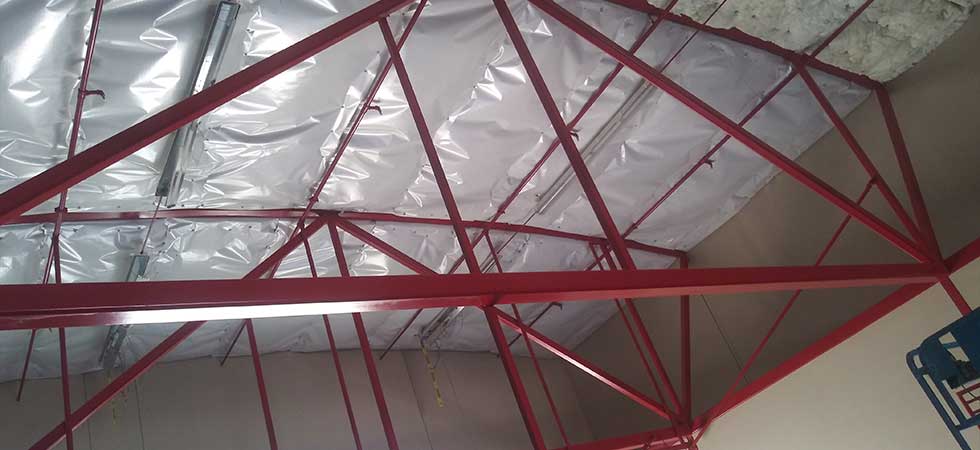
Warehouses are built for work, not comfort, but energy waste sneaks in anyway. Long roof spans, tall walls, rolling doors, and busy loading docks all move heat the wrong way at the wrong time. Forklifts come and go, air rushes in, and equipment throws off heat. If insulation is thin, missing, or broken, your power bills climb, and your crew feels it. The good news: a smart insulation plan fixes most of the loss without changing how you operate. In this guide, we’ll walk through seven common ways warehouses waste energy and the simple fixes insulation brings. You’ll see how better thermal resistance, air sealing, and moisture control steady the indoor climate, protect stock, and give your HVAC a much easier day.
1. Heat Escapes Through Uninsulated Walls And Roofs
Large wall and roof areas act like giant radiators. When the roof deck and wall panels have low thermal resistance, heat flows from warm to cold all day and night. In winter, heat slips out; in summer, it pours in from the sunbaked roof. The fix starts with continuous insulation that lifts the R-value and limits thermal bridges at purlins and girts.
How insulation fixes it
- Add continuous roof and wall systems (polyiso boards, mineral wool, or closed-cell spray foam) to boost R-value and reduce heat flow.
- Seal laps, fasteners, and penetrations so the insulation works as a system, not a patchwork.
- Use bright, reflective interior facers to lower radiant heat transfer inside the space.
Useful technical notes
- R-value = resistance to heat flow; higher is better.
- Thermal bridging happens where metal members “short-circuit” insulation. Continuous layers cut this loss.
- A well-detailed roof insulation system also supports more stable surface temperatures, which helps with condensation control.
2. Metal Buildings Suffer From Rapid Temperature Swings
Steel structures react fast to outdoor changes. Thin metal panels gain or lose heat quickly, making the indoor air swing with them. Workers feel drafts and sudden hot or cold spots, and equipment may drift out of its ideal temperature range.
How insulation fixes it
- Closed-cell spray foam adds both thermal resistance and an air barrier to the metal skin.
- High-R roof blankets or rigid boards beneath the deck slow down heat spikes from sun exposure.
- Reflective roof facers reduce radiant heat load on clear days.
Useful technical notes
- Thermal mass is low in metal shells, so insulation acts like a “buffer,” slowing temperature changes.
- A tighter envelope reduces the stack effect (warm air rising and escaping high, cool air drawn in low), which cuts drafts and hot heads/cold feet complaints.
3. Air Leaks Around Doors, Dock Shelters, Openings
Every minute a dock door opens, you exchange thousands of cubic feet of conditioned air with the outdoors. Even when doors are shut, worn seals, misaligned tracks, and gaps around conduits leak air. Fans and unit heaters then run longer to make up the difference.
How insulation fixes it
- Pair insulation upgrades with air sealing: door gaskets, brush seals, dock leveler seals, and tighter dock shelters.
- Insulate and seal the wall sections around high-traffic openings to reduce heat loss when doors are closed.
- Add insulated, fast-acting doors for high-cycle areas to shorten open times.
Useful technical notes
- Air changes per hour (ACH) drop when gaps are sealed; lower ACH means less load on HVAC.
- A continuous air barrier on walls and roof ties into door and window frames; without these tie-ins, leaks return.
4. Moisture And Condensation Reduce Thermal Insulation Performance
Warm, humid air meeting a cool metal surface reaches the dew point and forms condensation. Wet insulation loses much of its thermal resistance, plus it can stain ceilings, corrode metal, and threaten stored goods.
How insulation fixes it
- Use vapor retarders with the correct perm rating on the warm side of the assembly to control moisture drive.
- Seal penetrations to keep humid air from reaching cool surfaces behind the insulation.
- Choose closed-cell foam or faced boards in areas prone to moisture; these resist water uptake.
Useful technical notes
- Dew point is the temperature where air can’t hold more water vapor; planning layers so internal surfaces stay above dew point stops condensation.
- Thermal breaks in framing reduce cold spots that trigger localized sweating.
- Good insulation keeps surface temperatures stable, which reduces mold-friendly conditions.
5. HVAC Works Harder Than It Should Every Day
Oversized or overworked HVAC often covers up a weak envelope. Unit heaters blast near doors. DX units short-cycle on hot days. Ducts in hot roof spaces pick up extra heat, and fans run longer to hit setpoints. The bill shows it.
How insulation fixes it
- Raise R-values in roof and walls so indoor loads drop; the same HVAC now meets setpoints with fewer run hours.
- Insulate and seal ductwork, especially near the roof, to limit heat gain and loss.
- Create stable zones with insulated partitions for temperature-sensitive areas rather than cooling the entire volume.
Useful technical notes
- Lower building load can allow rightsizing at replacement time and gentler cycling today.
- A tighter, insulated shell improves supply air effectiveness because less of it is wasted, offsetting outdoor infiltration.
- Better envelope performance makes setpoint control steadier, helping processes and comfort.
6. Heat Gain From Equipment And Skylights Goes Unchecked
Forklift chargers, compressors, and lighting give off heat. Clear skylights can boost daylight, but they also invite solar gain. If the roof is lightly insulated or skylights lack thermal control, indoor temperatures climb, and cooling equipment has to fight that extra load.
How insulation fixes it
- Add high-R roof insulation and consider skylights with better U-factor and solar control properties.
- Use insulated curbs and proper flashing around skylights and roof fans to prevent leaks and thermal bridges.
- Combine roof insulation with reflective interior facers to cut radiant heat from sun-warmed panels.
Useful technical notes
- U-factor measures heat flow through windows and skylights; lower is better.
- Internal gains from equipment are easier to manage when the shell doesn’t add more load from above.
- Even small reductions in radiant heat make work zones feel more comfortable at the same thermostat setting.
7. Poor Acoustic Control Hurts Workflow And Energy
Noise may not sound like an energy issue, but it is. In loud spaces, teams often run extra fans for “white noise” comfort or keep doors cracked to “let sound out,” which also lets conditioned air out. Metal skins reflect sound, adding to the problem.
How insulation fixes it
- Use insulation systems with acoustic facers or perforated liners that absorb sound rather than reflect it.
- Insulated partitions create quieter zones for packing, QA, or offices without bleeding air to outdoors.
- Better door seals reduce both noise transfer and air leakage around openings.
Useful technical notes
- Sound-absorbing facers lower reverberation time, improving speech clarity and reducing the urge to open doors or crank fans.
- Multi-benefit assemblies (thermal + acoustic + air barrier) often cost less over time than single-purpose fixes.
Practical Steps To Start Your Insulation Upgrade
Even a few measured moves can show quick gains. Here’s a simple plan you can act on now:
- Survey the shell: Walk the roof and walls. Look for stained facers, loose fasteners, missing gaskets, and daylight through gaps.
- Check the docks: Feel for drafts at closed doors. Inspect dock levelers, bumpers, and shelters for torn or flattened seals.
- Scan for moisture: Note any sweating on purlins or around skylights early in the morning when surfaces are coolest.
- Review HVAC runtimes: If units run long yet comfort still swings, the shell likely needs help.
- Prioritize by payback: Roof insulation and air sealing at docks often give noticeable results first.
Conclusion
Energy waste in a warehouse is not one big flaw; it’s many small paths for heat and air to move the wrong way. Insulation closes those paths, steadies indoor conditions, and helps your HVAC do its job with less effort. A tight, well-insulated shell also protects stock, improves comfort, and keeps moisture under control. If you want a clear plan that fits your facility, Alpha Insulation can assess your building, recommend the right systems, and install them with care, covering roof, walls, docks, ducts, and more to cut waste where it starts.